
Remembering the heroes of the Workers Battalion
Tuesday, 29.11.2011 | News
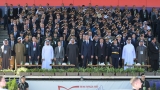
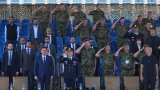
Serbian Army Chief of Staff, General Miloje Miletic, acting as envoy of the President of the Republic of Serbia, laid a wreath at the memorial complex "Kadinjaca" near Uzice, on the occasion of the seventy years of the battle on Kadinjaca. On behalf of the Government of Serbia, the wreath was laid by the Minister of Education Zarko Obradovic.
Serbian
Army Chief of Staff, General Miloje Miletic, acting as envoy of the
President of the Republic of Serbia, laid a wreath at the memorial
complex "Kadinjaca" near Uzice, on the occasion of the seventy years of
the battle on Kadinjaca. On behalf of the Government of Serbia, the
wreath was laid by the Minister of Education Zarko Obradovic.
"This is an opportunity to remember the courage of those who were killed at Kadinjaca70 years ago. Red blood that streaked the snow cover, as, poet Slavko Vukosavljevic wrote about the event was covered in snow at night. However, the widns of history did not delete our memory of the victims of World War II. May they live in eternal glory! "said General Miletic.
Speaking at the commemoration, General Miletic said that the citizens of Serbia, deeply convinced that freedom is priceless, are always ready to lay their lives as a sacrifice and make both individual and collective heroic deeds. This willingness, in the words of General Miletic, was specifically expressed in the two world wars, which contributed to the Allies’ victory.
"The Second World War was a time of pain and suffering of the largest scale, which history has recorded so far. In this war, Serbia was the scene of a brave resistance to fascism which took the lives of numerous victims and wreaked destruction. Committed to the ideas of peace, Serbia today is building bridges of cooperation and partnership. In doing so, the army helps too, "Miletic said, adding that the past few years, the Army of Serbia and the Ministry of Defense had done a great job in improving and modernizing the defense system, strengthening the security of the citizens of Serbia and the promotion of universal values common to the democratic state of the world.
"We finished the professionalization of the army, opened thousands of jobs for young people in Serbia, enabling young men and women who wish to continue the tradition of their fathers to volunteer and serve in the military, created the modern doctrinal framework for the use of military force, which provides solutions to security challenges, risks and threats of our time and provides an effective and rational execution of the mission and duties of SAF, Miletic said.
He said that the Serbian Army has become an institution that not only guarantees the security of Serbia, but also contributes to its development in all fields of science and education, the economy and international relations, as it is capable of providing a full contribution to peace and security in region and the world.
"The legacy of anti-fascism prove that Serbia is a part of the democratic world. It has its place in a united Europe, modern states and nations that respect the diversity of cultures, not forgetting its uniqueness and its tradition, "the SAF CHOD general Miloje Miletic remarked.
Minister of Education Zarko Obradovic said that Kadinjaca today stood as a symbol that Serbia was and still is a country of liberty and freedom of culture and tradition therefore any rewriting of history can not deny this human sacrifice.
Uzice Mayor Jovan Markovic reminded that seventy years ago Kadinjaca was where the only free territory in Europe was being defended.
"History records that the battle to Kadinjaca lasted less than two hours. Serbian historians have so far collected about 160 names of fallen soldiers. Uzice remembers Kadinjaca heroes. For us, the 29th November is a day of sadness and pride. Sorrow for every life lost I the battle, and pride because we are descendants of those who deeply believed in their ideals, making our existence meaningful, but only if we live freely and honorably, "said Markovic.
General Miletic in wrote in the memorial book: "The foundations of Serbia lie on your lives. Therefore, these foundations are strong. Serbia can build a European future on them. "
The words "Victims of Kadinjaca are part of our history, our memory and the future of Serbia", as Minister of Education Zarko Obradovic wrote.
During the ceremony wreaths were laid at the memorial complex "Kadinjaca" with high military honors, by MoD and SAF delegation headed by Army Commander Lt. Gen.
Ljubisa Dikovic, representatives of the Ministry of Labour and Social Policy, SUBNOR Serbia and the town of Uzice.
Respecting the Workers Battalion sacrifice, the Serbian government has included this day as an important date in its State program, aware of the fact that this is a permanent site, which testifies to the traditional freedom and love of freedom of our people.
On that 29th November 1941, 270 soldiers under the command of Andrija Djurovic, commander of the Workers Battalion, trying to deter the enemy and protect the retreat of HQ forces, provided the resistance to a far superior enemy, and slowing down the German offensive. By breaking this last wall of defense, the Republic of Uzice was also broken as one of the first territories in Europe liberated from the German army during World War II. Slavko Vukosavljevic’s verses are inscribed on the memorial monument reminiscent of the fallen soldiers’ heroism.
The memorial complex "Kadinjaca" was opened on 23 September 1979. It represents the architectural and museum complex, which is a series of segments built between the 1952 and 1979. In the first phase a pyramidal shape was built under which lies a crypt where the remains of fallen members of the Workers Battalion during the Battle of Kadinjaca were laid to rest. Significant expansion of the complex was made in 1979 when it was designed by sculptor and architect Miodrag Zivkovic and Aleksandar Djokic ended the arrangement of the complex thus giving its current appearance.
A special section is a museum exhibition with over three hundred authentic objects and documents mainly relating to members of the Workers Battalion. This exhibition includes personal documents, photographs, archival materials, weapons and other three-dimensional exhibits.
"This is an opportunity to remember the courage of those who were killed at Kadinjaca70 years ago. Red blood that streaked the snow cover, as, poet Slavko Vukosavljevic wrote about the event was covered in snow at night. However, the widns of history did not delete our memory of the victims of World War II. May they live in eternal glory! "said General Miletic.
Speaking at the commemoration, General Miletic said that the citizens of Serbia, deeply convinced that freedom is priceless, are always ready to lay their lives as a sacrifice and make both individual and collective heroic deeds. This willingness, in the words of General Miletic, was specifically expressed in the two world wars, which contributed to the Allies’ victory.
"The Second World War was a time of pain and suffering of the largest scale, which history has recorded so far. In this war, Serbia was the scene of a brave resistance to fascism which took the lives of numerous victims and wreaked destruction. Committed to the ideas of peace, Serbia today is building bridges of cooperation and partnership. In doing so, the army helps too, "Miletic said, adding that the past few years, the Army of Serbia and the Ministry of Defense had done a great job in improving and modernizing the defense system, strengthening the security of the citizens of Serbia and the promotion of universal values common to the democratic state of the world.
"We finished the professionalization of the army, opened thousands of jobs for young people in Serbia, enabling young men and women who wish to continue the tradition of their fathers to volunteer and serve in the military, created the modern doctrinal framework for the use of military force, which provides solutions to security challenges, risks and threats of our time and provides an effective and rational execution of the mission and duties of SAF, Miletic said.
He said that the Serbian Army has become an institution that not only guarantees the security of Serbia, but also contributes to its development in all fields of science and education, the economy and international relations, as it is capable of providing a full contribution to peace and security in region and the world.
"The legacy of anti-fascism prove that Serbia is a part of the democratic world. It has its place in a united Europe, modern states and nations that respect the diversity of cultures, not forgetting its uniqueness and its tradition, "the SAF CHOD general Miloje Miletic remarked.
Minister of Education Zarko Obradovic said that Kadinjaca today stood as a symbol that Serbia was and still is a country of liberty and freedom of culture and tradition therefore any rewriting of history can not deny this human sacrifice.
Uzice Mayor Jovan Markovic reminded that seventy years ago Kadinjaca was where the only free territory in Europe was being defended.
"History records that the battle to Kadinjaca lasted less than two hours. Serbian historians have so far collected about 160 names of fallen soldiers. Uzice remembers Kadinjaca heroes. For us, the 29th November is a day of sadness and pride. Sorrow for every life lost I the battle, and pride because we are descendants of those who deeply believed in their ideals, making our existence meaningful, but only if we live freely and honorably, "said Markovic.
General Miletic in wrote in the memorial book: "The foundations of Serbia lie on your lives. Therefore, these foundations are strong. Serbia can build a European future on them. "
The words "Victims of Kadinjaca are part of our history, our memory and the future of Serbia", as Minister of Education Zarko Obradovic wrote.
During the ceremony wreaths were laid at the memorial complex "Kadinjaca" with high military honors, by MoD and SAF delegation headed by Army Commander Lt. Gen.
Ljubisa Dikovic, representatives of the Ministry of Labour and Social Policy, SUBNOR Serbia and the town of Uzice.
Respecting the Workers Battalion sacrifice, the Serbian government has included this day as an important date in its State program, aware of the fact that this is a permanent site, which testifies to the traditional freedom and love of freedom of our people.
On that 29th November 1941, 270 soldiers under the command of Andrija Djurovic, commander of the Workers Battalion, trying to deter the enemy and protect the retreat of HQ forces, provided the resistance to a far superior enemy, and slowing down the German offensive. By breaking this last wall of defense, the Republic of Uzice was also broken as one of the first territories in Europe liberated from the German army during World War II. Slavko Vukosavljevic’s verses are inscribed on the memorial monument reminiscent of the fallen soldiers’ heroism.
The memorial complex "Kadinjaca" was opened on 23 September 1979. It represents the architectural and museum complex, which is a series of segments built between the 1952 and 1979. In the first phase a pyramidal shape was built under which lies a crypt where the remains of fallen members of the Workers Battalion during the Battle of Kadinjaca were laid to rest. Significant expansion of the complex was made in 1979 when it was designed by sculptor and architect Miodrag Zivkovic and Aleksandar Djokic ended the arrangement of the complex thus giving its current appearance.
A special section is a museum exhibition with over three hundred authentic objects and documents mainly relating to members of the Workers Battalion. This exhibition includes personal documents, photographs, archival materials, weapons and other three-dimensional exhibits.